バンコクBTS(スカイトレイン)の乗り方・路線図・ラビットカードについても解説!
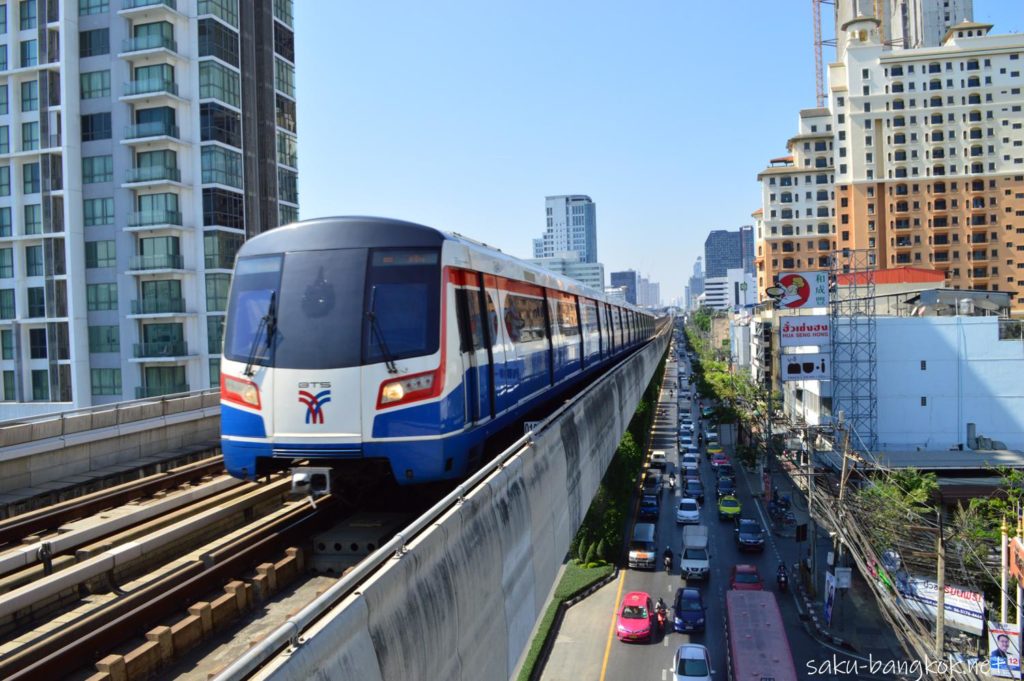
渋滞の激しいバンコク市内で、おもな移動手段になるのがスカイトレインBTSと地下鉄MRTです。
今回はBTSの乗り方について初めての方でも分かりやすいように、
- 路線図
- きっぷの買い方
- BTSに乗るときの注意事項
について解説します。
BTSの路線図・料金・運行時間
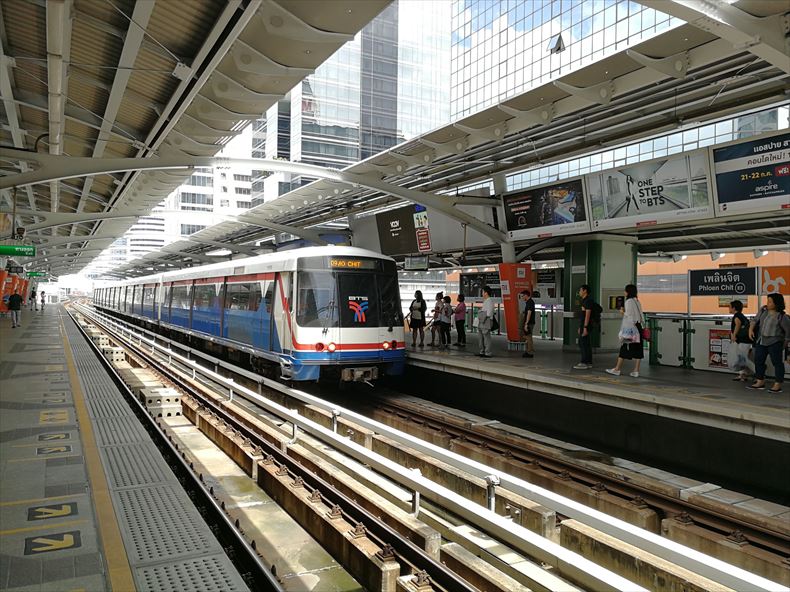
まずはBTSの基本情報から。
BTSの路線図
バンコクの最新の路線図は下の図のとおりです。
BTSは黄緑色のスクンビットラインと、深緑色のシーロムラインの2つの路線があり、サイアム駅で接続しています。
バンコクにはBTSのほかに、スワンナプーム国際空港に行けるエアポートレイルリンク(ARL)と地下鉄MRTがあって、別会社が運営しています。
BTSの運賃
運賃は16バーツ(約53円)から最大59バーツ(約195円)です。
なお、身長90cm以下の子どもは無料です。子ども料金の設定はなく、90cm以上の子どもは大人と同額の運賃を支払います。
BTSの運行時間と運行間隔
運行時間はだいたい朝6時から夜中24時までです。運行間隔は3分から8分程度。それほど待つことはありません。
もっと詳しい駅ごとの始発・終電、そして時間帯ごとの運行間隔については、BTSの公式Webサイトを御覧ください。
BTSのきっぷの種類
BTSのきっぷの種類は以下の三種類があります。
- Single Journey ticket(シングルジャーニーチケット)…普通のきっぷ。距離に応じて16~59バーツ
- One Day Pass(ワンデイパス)…一日乗車券 140バーツ
- Rabbit Card(ラビットカード)…日本でいうSuicaのようなIC乗車券
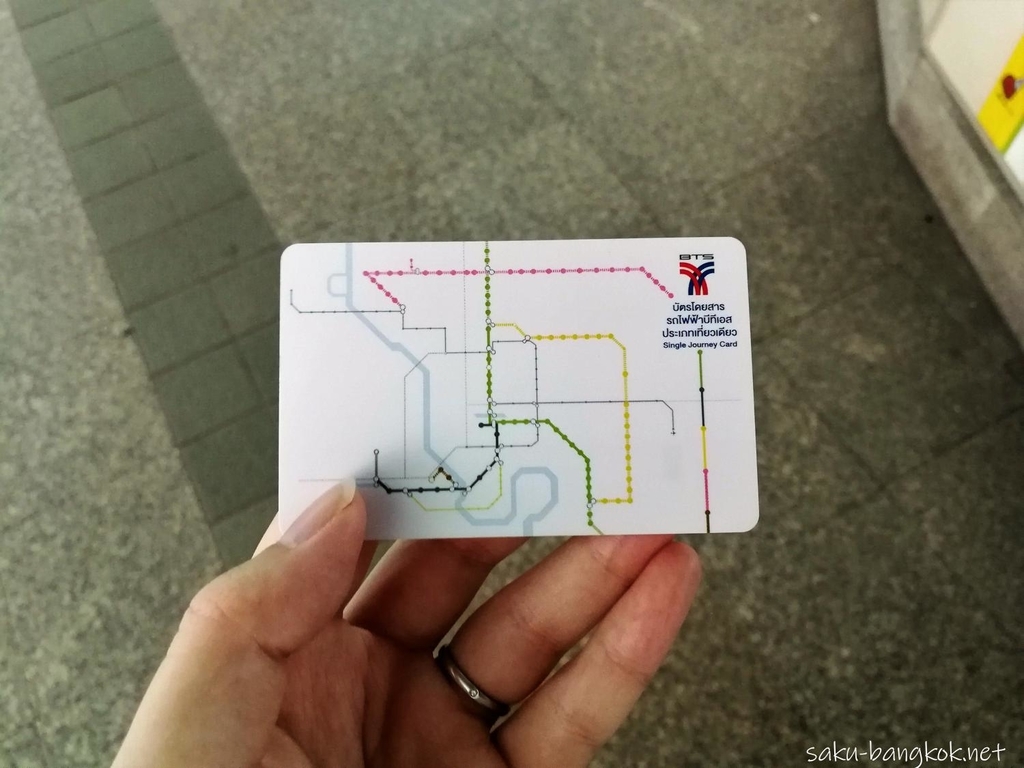
Single Journey ticket(シングルジャーニーチケット)
券売機で買える通常のチケットです。
One Day Pass(ワンデイパス・1日乗車券)
BTSに1日乗車しほうだいのワンデイパス。1枚140バーツです。BTSの窓口で購入します。
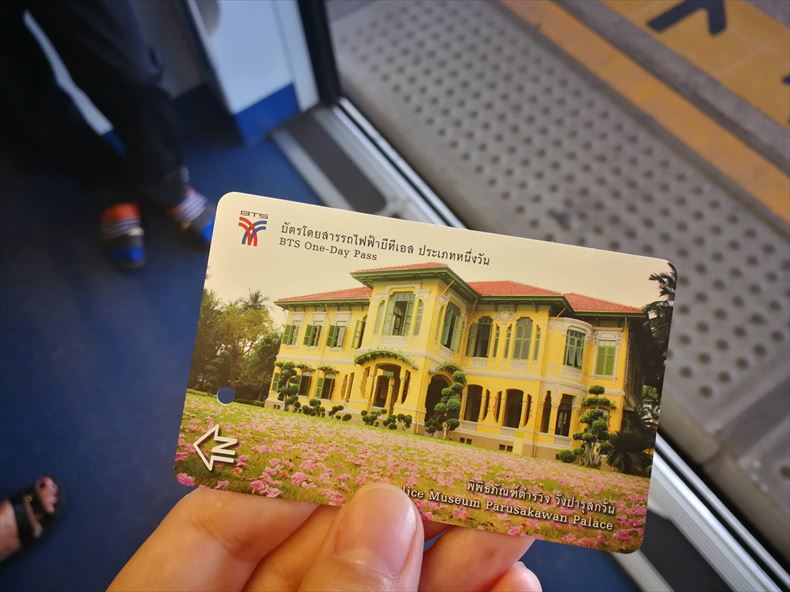
上の写真は以前私が購入したものですが、今は違う見た目になっているかもしれません。
140バーツという価格は、1日バンコクで過ごしたときに元をとれるかどうかの微妙なラインなのですが、いちいち券売機に並ぶ時間を節約できる意味で購入してもいいんじゃないかと思っています。滞在期間中に丸1日バンコクで過ごすのは1日か2日。というような方におすすめです。
滞在期間が長い方ならば、以下のラビットカードの購入の方が便利じゃないかと思います。
Rabbit Card(ラビットカード)
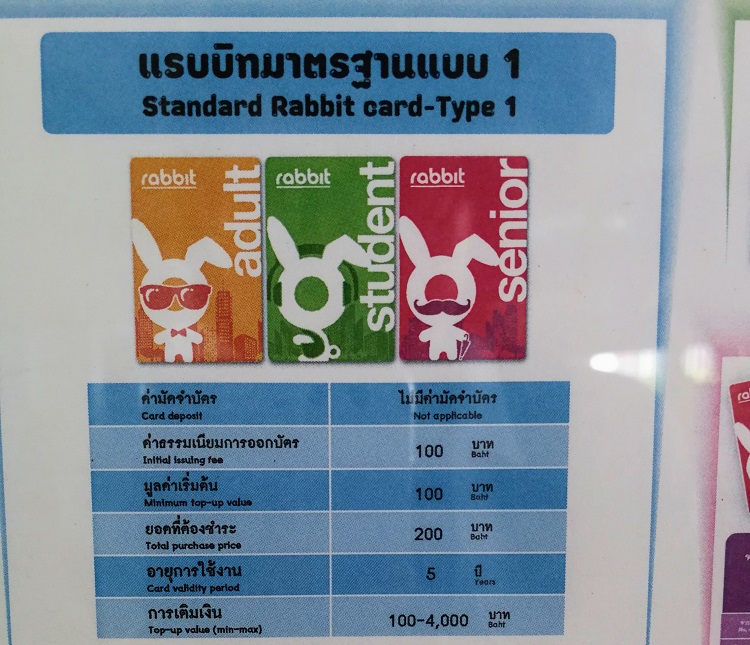
ラビットカードはチャージ式のICカードで、日本でいうSuicaみたいなものです。券売機に並んできっぷを買う時間を節約できるのがメリット。
ラビットカードの価格は最低200バーツで、そのうちわけは、
- カード発行手数料:100バーツ(約350円)
- 初期チャージ額:100バーツ(約350円)~(金額を自分で選べる)
となっています。
なお、微々たるものですが、ラビットカードを使って乗車すると運賃が1バーツ引きになるキャンペーンをやっています。
ラビットカードでは、チャージのほか30日間使える回数券(30-Day Trips)を追加することもできます。こちらも窓口で購入します。
| 回数 | 金額 | 1回あたりの平均金額 |
| 15回 | 465 Baht | 31 Baht/回 |
| 25回 | 725 Baht | 29 Baht/回 |
| 40回 | 1,080 Baht | 27 Baht/回 |
| 50回 | 1,300 Baht | 26 Baht/回 |
近距離で利用すると回数券の方が割高になるので、通勤などで毎日長距離を乗る人向けかな。
回数券についてもっと詳しく知りたい方は公式Webサイト(英語)をご覧ください。
旅行後にラビットカードを使用しない場合は、窓口で返却できます。このとき、チャージ分の金額は戻ってきますが、カード発行手数料の100バーツは返ってきません。100バーツ(約350円)で便利さと時間を買うのか、100バーツ節約するのか迷うところです。
ラビットカードは購入から5年間有効なので、タイリピーターの方ならそのままカードを持ち帰って繰り返し使うのが良いと思います。
ちなみに、ラビットカードをモバイル決済・ラビットラインペイと連携することが可能になりました。このことについて詳しく知りたい方はこちらの記事をご覧ください。
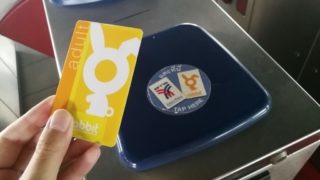
ラビットカードは地下鉄MRT、エアポートレイルリンクでは利用できません。
BTSの乗り方
次にBTSの乗り方について具体的に解説していきます。
BTSのきっぷを買う
BTSの駅に着いたら、まずはきっぷを入手しましょう!以下、それぞれのきっぷの買い方を解説します。
BTSのSingle Journey ticketの買い方:券売機1【紙幣とコインが使えるタイプ】
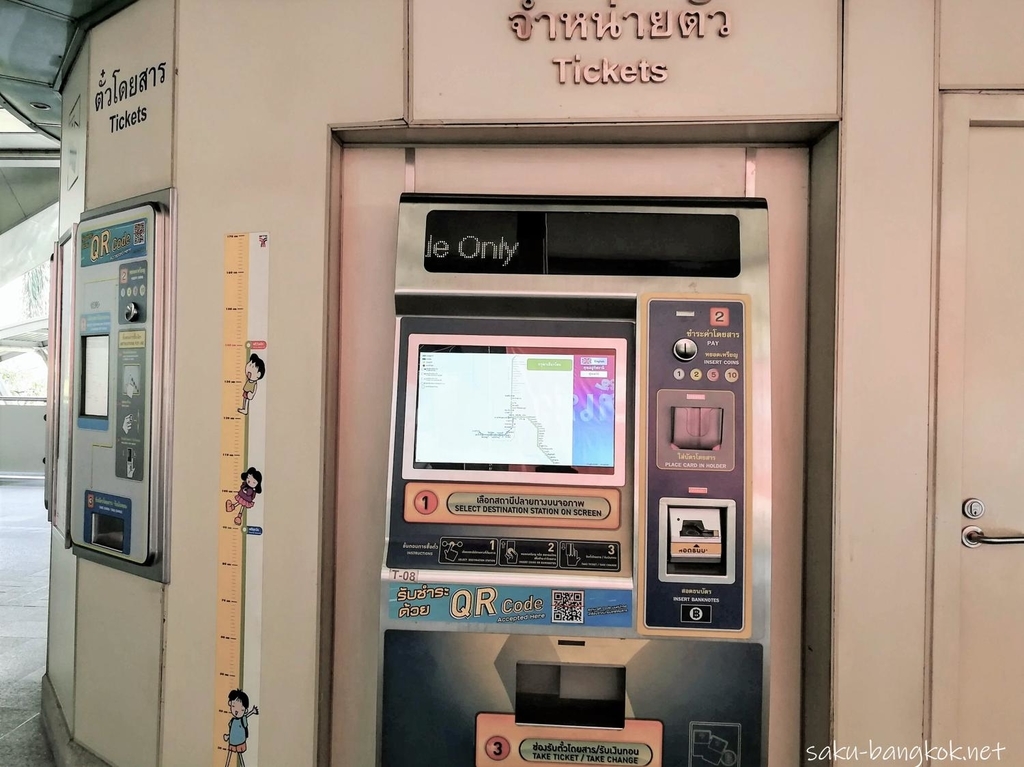
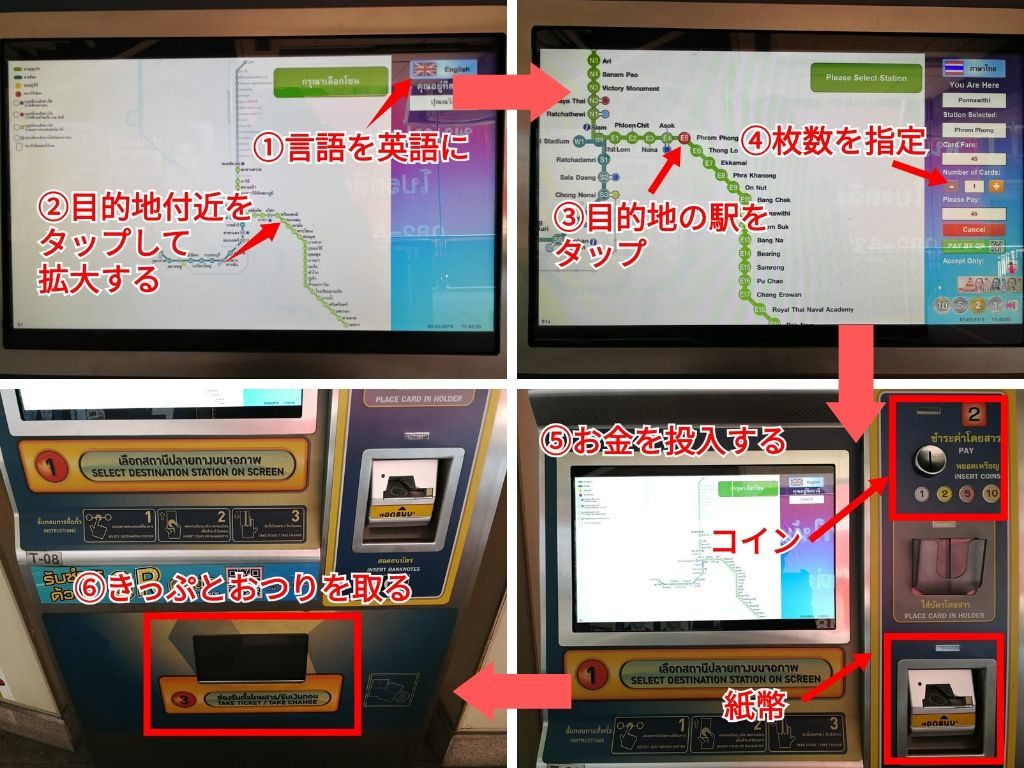
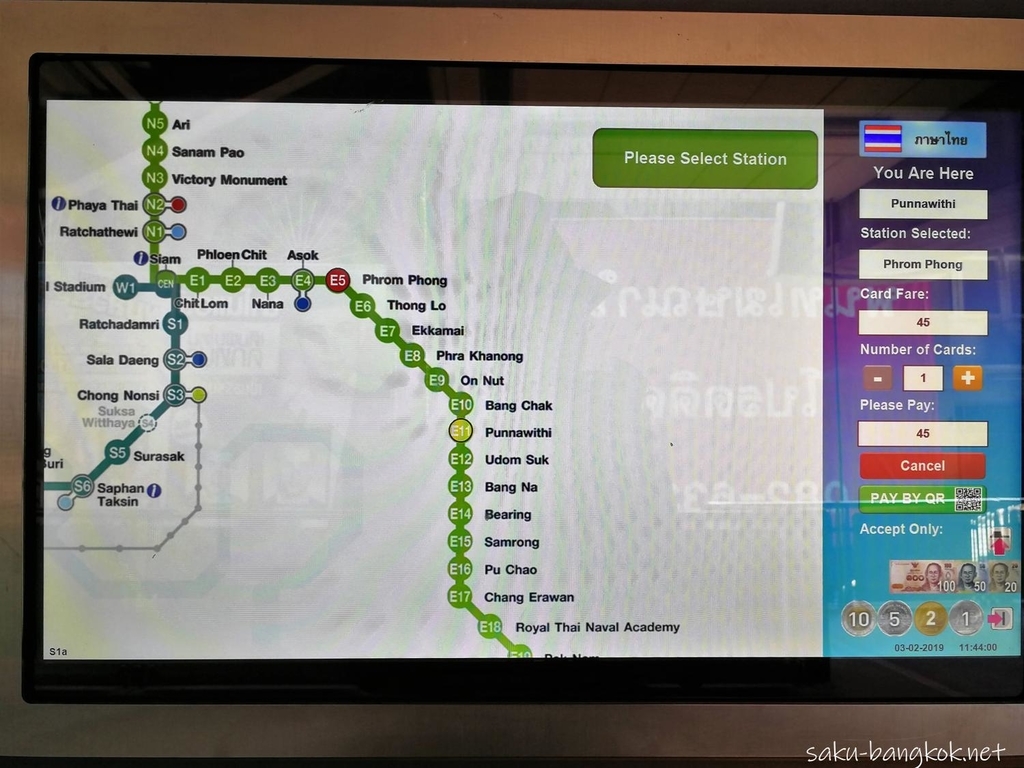
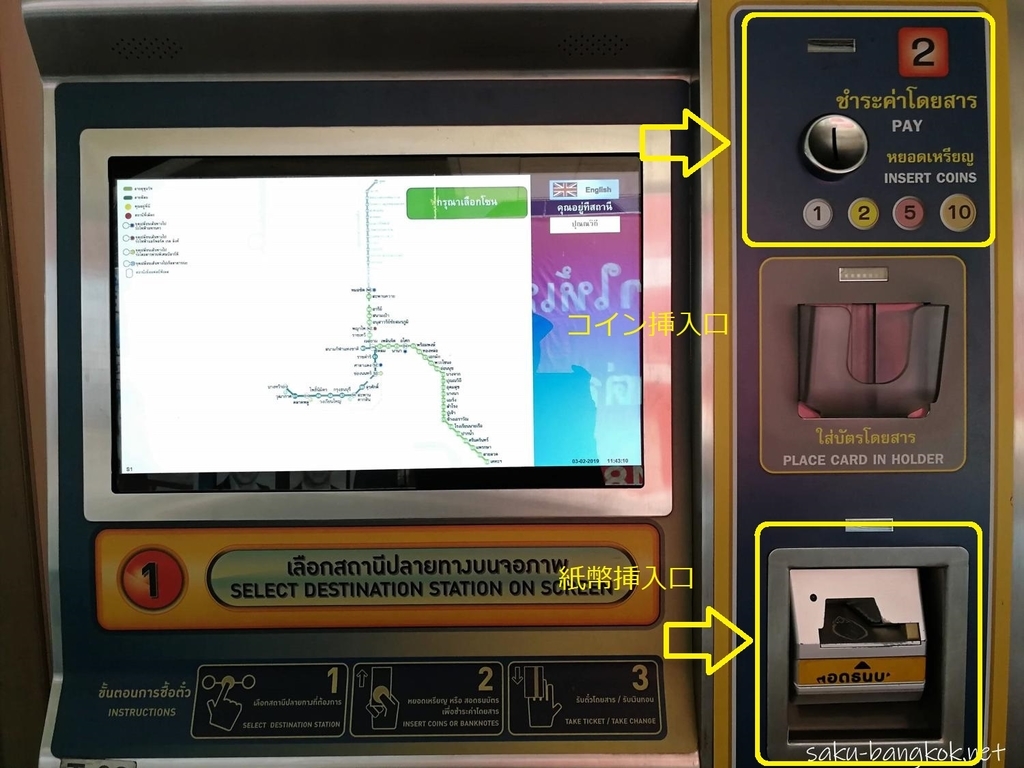
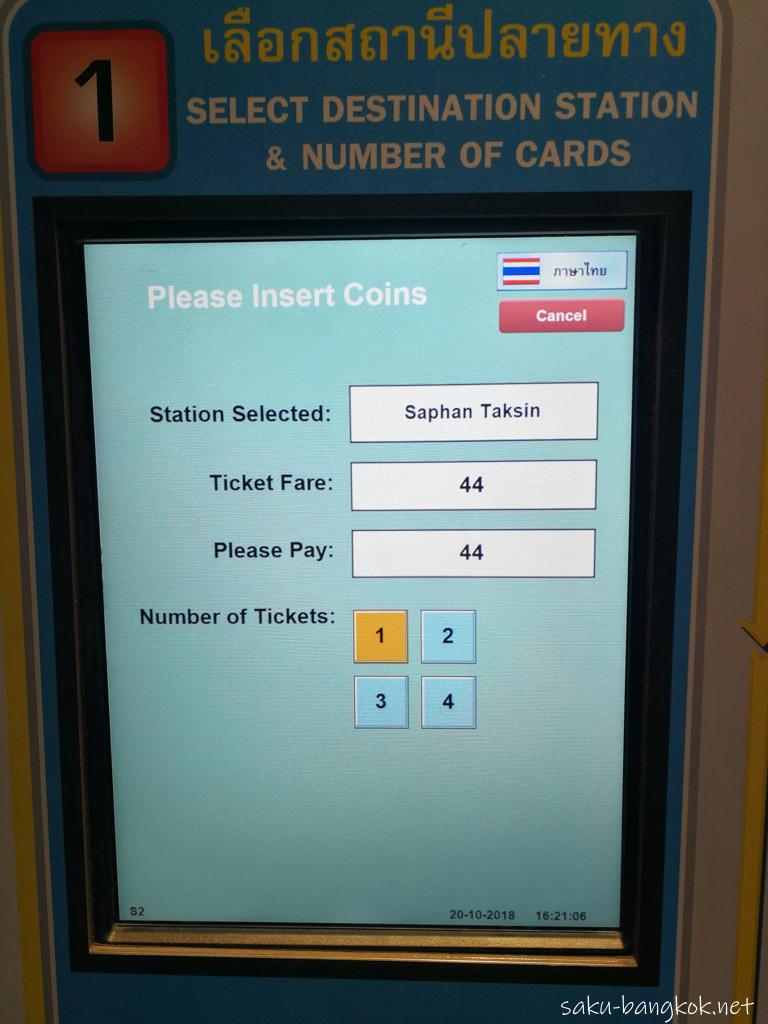
紙幣とコインが使えるタイプの券売機です。タッチパネル式で、画面に路線図が表示されています。使い方は以下の6ステップ。
- 言語を英語に切り替える
- 目的の駅付近をタップしてズームする
- 目的地の駅をタッチ
- 枚数を選択する
- 料金を投入する
- きっぷ(カード)とお釣りをとる
以下の写真のようなカード型のきっぷが出てきます。
BTSのSingle Journey ticketの買い方:券売機2【コインのみ使えるタイプ】
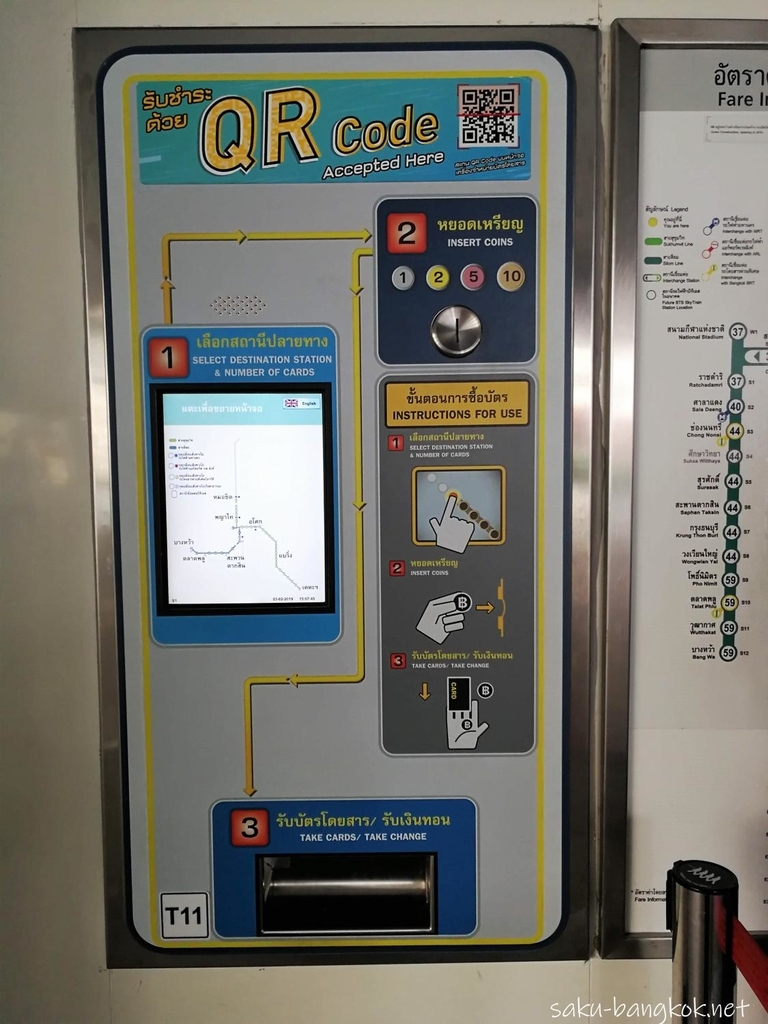
上の写真のような縦長タイプの券売機は1、2、5、10バーツコインしか使うことができず、紙幣は使えません。コインが足りないときには、改札脇にある窓口でくずしてもらってください。
券売機の使い方は、さきほどのタイプとほぼ同様です。
ちなみに、モバイル決済・ラビットラインペイに登録している方はQRコードで購入することも可能です。券売機1(紙幣&コイン)、券売機2(コインのみ)、どちらのタイプの券売機も対応しています。
具体的なやり方は☆M’s bangkok life diary☆さんのブログが参考になります。
BTSのOne Day Pass(ワンデイパス・1日乗車券)とラビットカード(Rabbit Card)の購入は窓口で
One Day Pass(ワンデイパス・1日乗車券)とラビットカード(Rabbit Card)は、改札横の窓口で購入します。
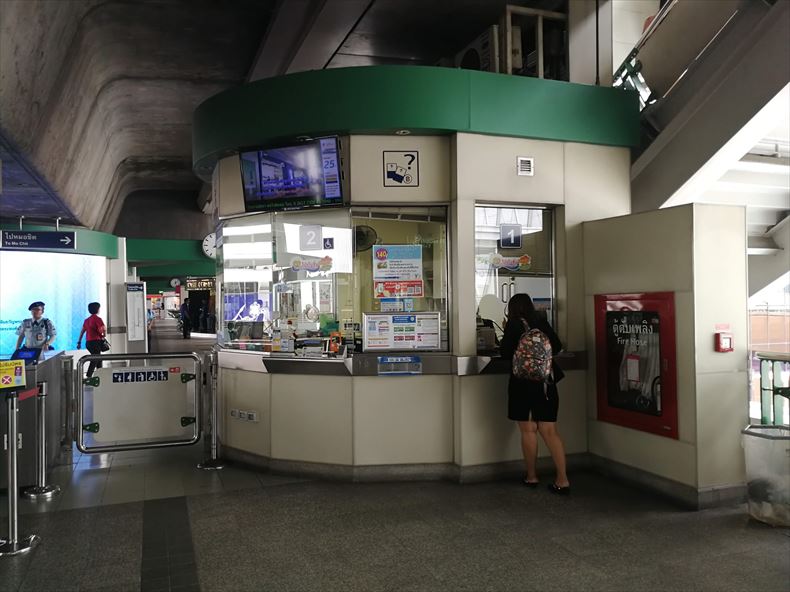
ラビットカードのチャージや回数券(30-Day Trips)も同じ窓口で購入します。窓口でチャージするときは、「チャージ」よりも「トップアップ」といったほうが通じやすいと思います。チャージは100バーツ単位で可能です。
- 2019年2月15日からラビットカード購入時とチャージするときにパスポートの提示が必要になりました。ただし実際の運用は窓口によってバラバラで、提示を求められないこともあるようです。
- BTSの窓口ではクレジットカードは利用できません。ラビットラインペイ決済のみ可能です。
BTSの改札の通過方法
きっぷを入手したら改札を通ってホームへ向かいます。
Single Journey ticket(普通のきっぷ)の場合
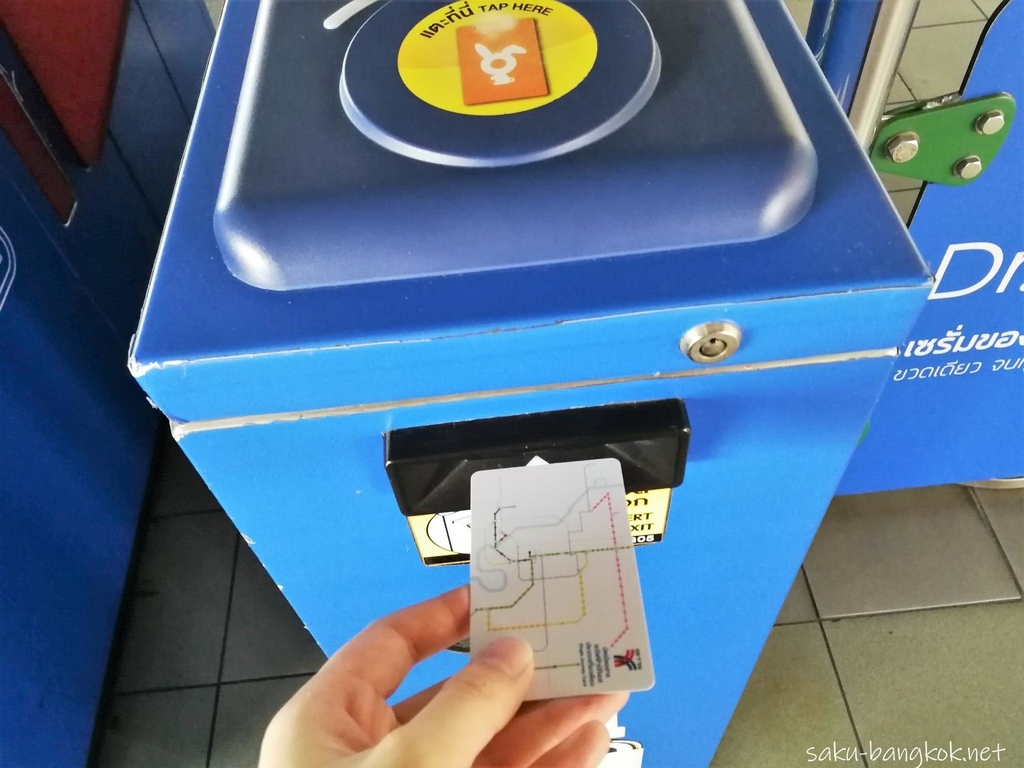
券売機で買ったSingle Journey ticket(普通のきっぷ)の場合。
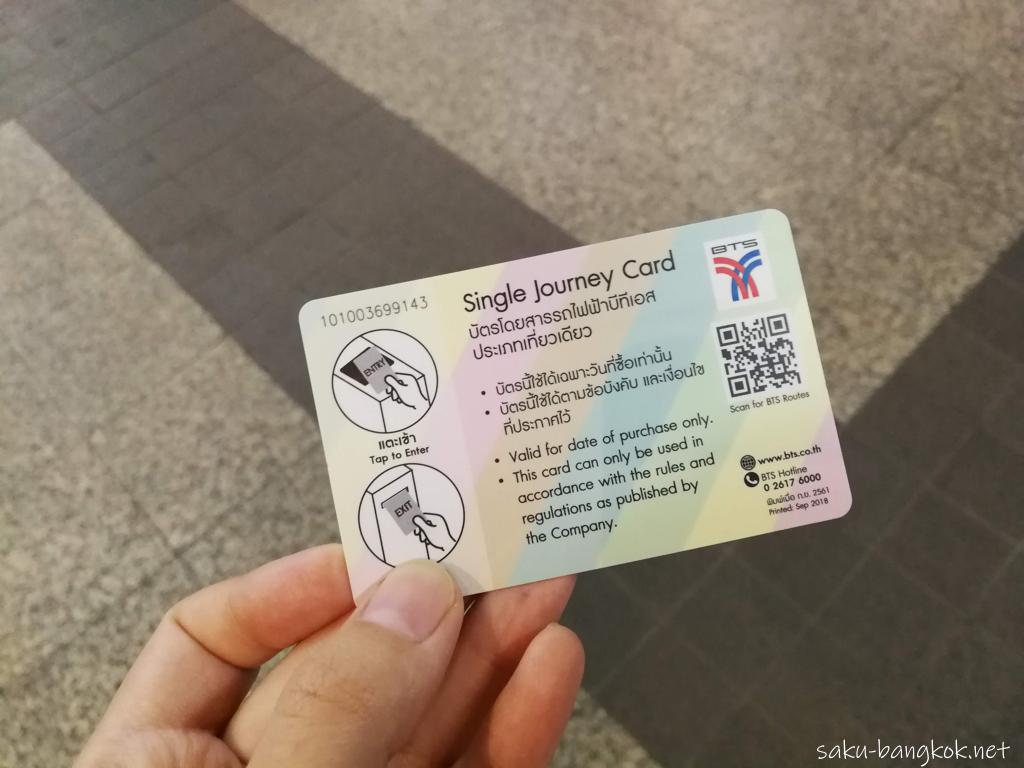
改札に入る時にはタップ。
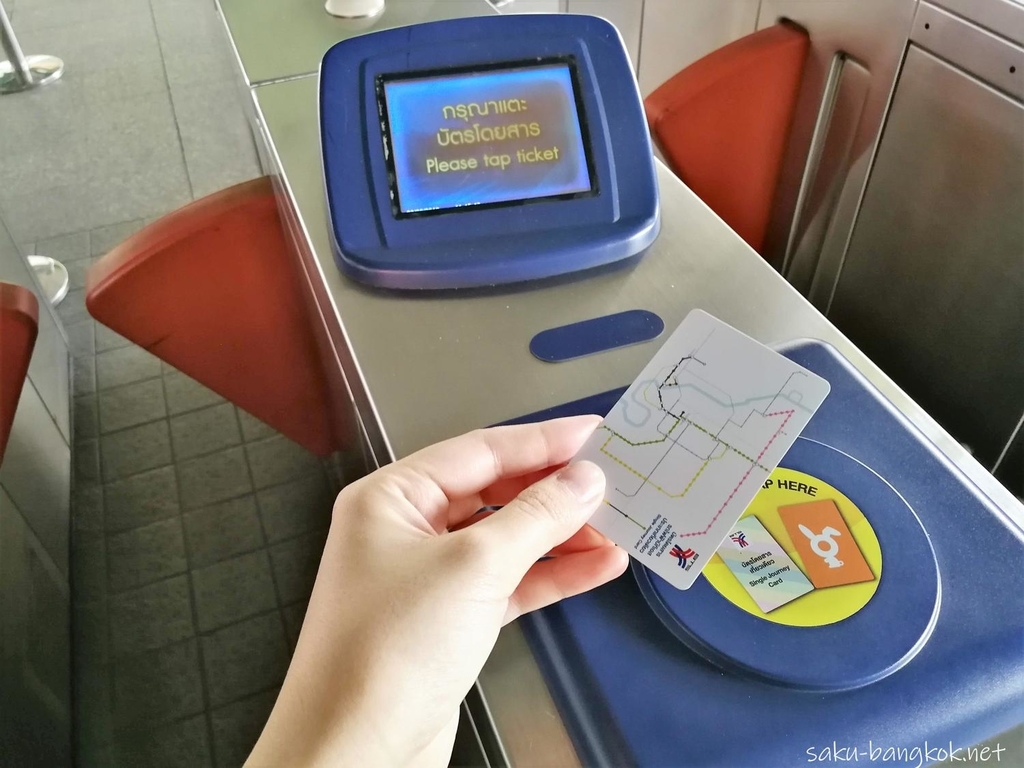
改札から出る時には、スリットに挿入します。
ラビットカードの場合
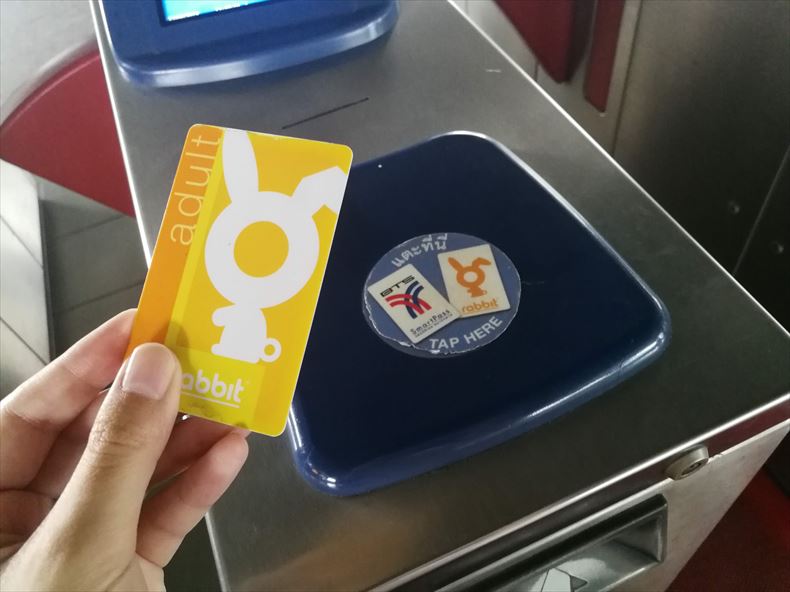
ラビットカードは、改札に入る時も、出るときもタップします。
その他の注意事項
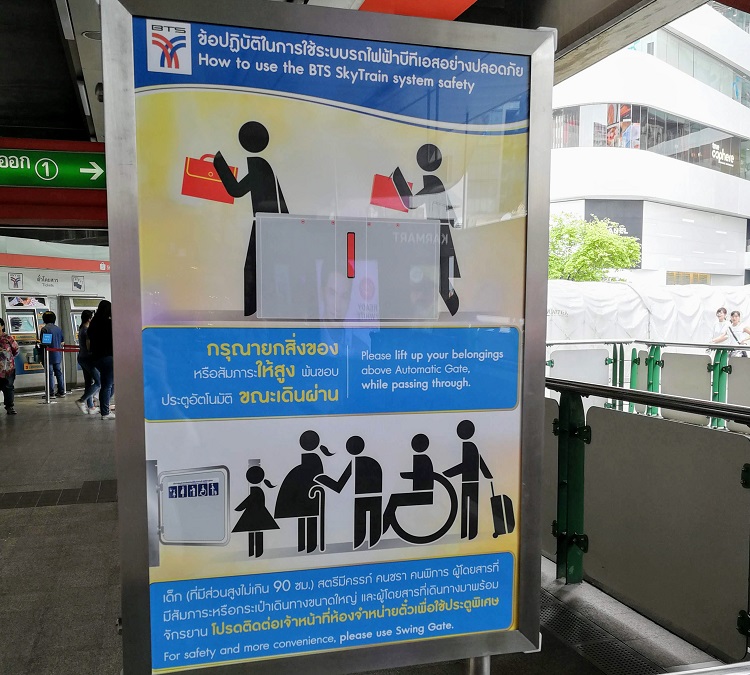
BTSの改札のゲートは閉まるスピードが速く挟まれるととても痛いので、急いで通りぬける必要があります。
大きなバッグをもっている場合には持ち上げて通ると挟まれにくいみたい。
改札を抜けたら荷物チェックの係員がいます。全員をチェックしているわけではないので、もし呼び止められたら荷物を開けて見せます。特に反応がなければそのままホームへ向かってOKです。
BTSの駅構内の構造
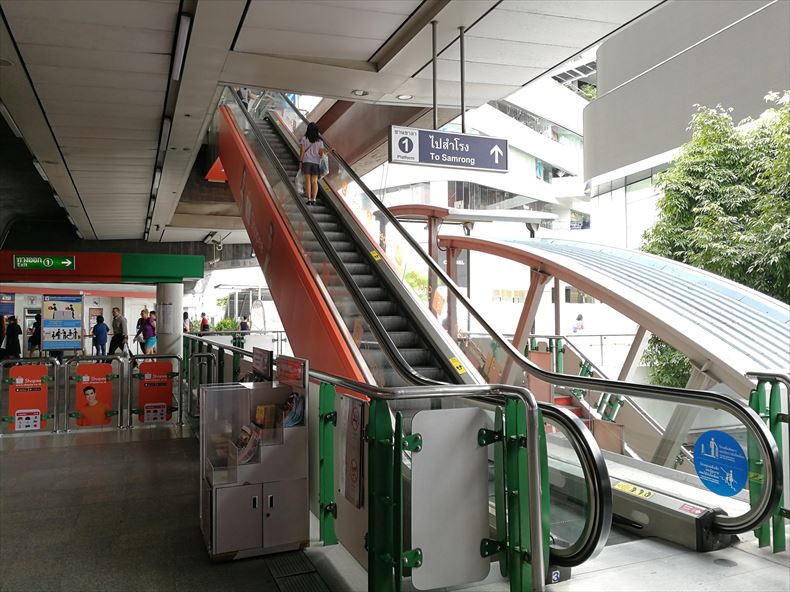
ホームに登る階段・エスカレーターは左右にあります。進行方向を間違えないように終点を確認してからのぼってください。
ホームが一つしかない「サパーンタクシン駅」
ホームは左右2つあると書きましたが、例外もあります。
そのうちの一つがサパーンタクシン駅です。この駅だけはホームは一つしか無いので、ナショナルスタジアム駅行きに乗る人も、バンワー駅行きに乗る人も同じホームを使います。間違えやすいので、電車の行き先表示をよく確認してから乗車してください。
階層構造になっている「サイアム駅」
もうひとつの例外が、BTSのスクンビット線とシーロム線の乗り換え駅になっているサイアム駅です。
この駅では、スクンビット線のカセサートユニバーシティー行き、ケーハ行き、シーロム線のナショナルスタジアム行き、バンワー行きと4つのホームがあるため、階層構造になっています。
- 改札フロアの一つ上(2階)のホームがケーハ行きとバンワー行き
- そのもうひとつ上(3階)のホームがカセサートユニバーシティー行きとナショナルスタジアム行き
です。ちょっと複雑なので注意!
目的のBTSの駅に着いたら正しい番号の出口から出る
目的の駅に着いたら、改札を出る前に出口を確認します。
多くのBTSの駅は左右2か所に改札口があって、一度改札を出てしまうと反対側の改札には行けない仕組みになっています。間違った改札口から出てしまうとめんどうなことになるので、改札を出る前に目的地に近い出口を地図で確認するのをおすすめします。
ホームから階段を降りてきたあたりに、地図が設置されているのでこちらで確認しましょう。
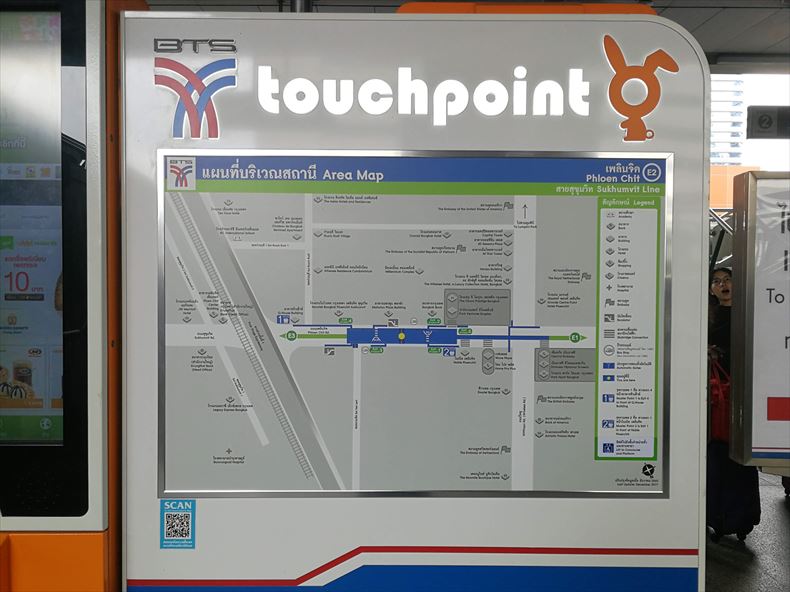
BTSについて知っておきたいこと
そのほか、BTSについて知っておきたいことを書いておきます。
BTS駅構内での禁止事項
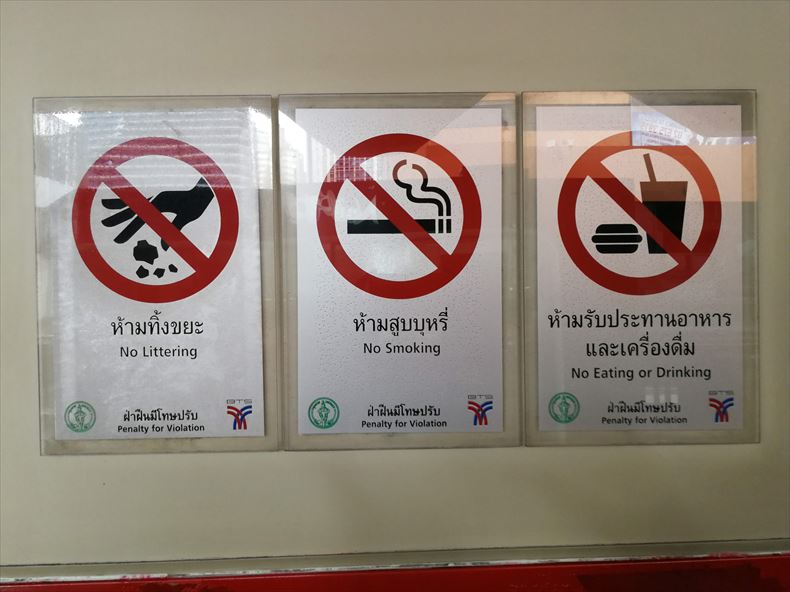
BTSの駅構内、車内では喫煙・飲食禁止です。飲み物などを持っていると改札のところで没収されるのでお気をつけください。
そのほか風船(ガス入り・ガスなし両方)の持ち込みも禁止なんだそう。
BTSの駅にトイレはありません
日本の駅と大きく違うところなのですが、BTSの駅の構内には一般客用のトイレがありません。ただし、どうしても困ったときには係員に訴えると職員用のトイレを使わせてくれるときもあります。
車椅子・ベビーカー・妊婦の方がBTSを利用する場合
車椅子やベビーカー、妊婦の方がBTSを利用する場合に必要な施設情報についても書いておきたいと思います。
BTSの駅のエレベーター・エスカレーターの有無
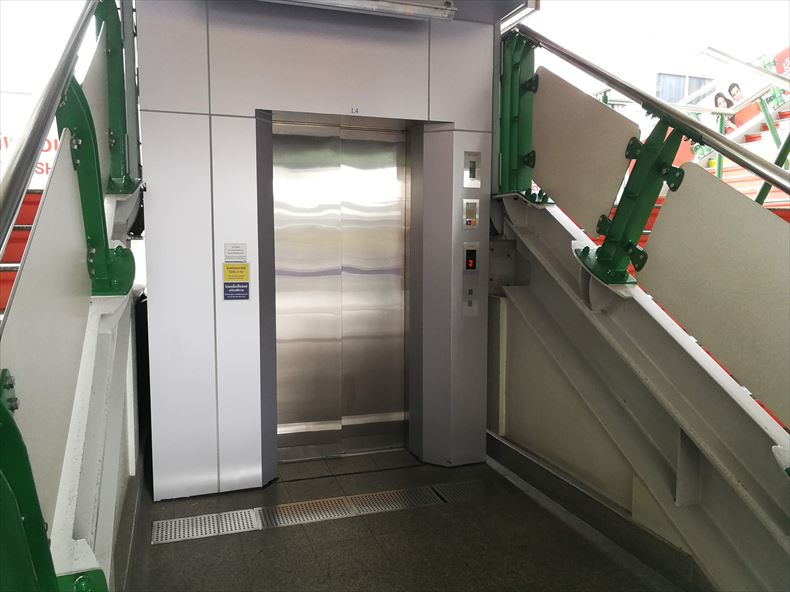
改札階からホームに向かうエレベーターはたいていの駅に設置されています。地上から改札階行きのエレベーターについては設置されている駅と無い階があります。
それぞれの駅のエレベーターの有無と場所はこちらのアプリで確認できます。
ただし、地上から改札階行きのエレベーターは故障していることも多いんですよね。せっかく設置したのにもったいない…。一方、エスカレーターはどの駅にも設置されていますが、下りエスカレーターは設置されていないことがほとんどです。
正直、階段の上り下りに不安のある方はタクシーなどを利用した方が無難だと思います。


車椅子、ベビーカー、妊婦さん用の改札
BTSの改札は狭くて勢いよく閉まるので、車椅子、ベビーカー、妊婦さんは使えません。代わりに窓口の近くのゲートを使用できますので、係員に声をかけて通してもらってください。このゲートはスーツケースなど大きな荷物を持っている方も利用できます。
以上、バンコクのBTSの乗り方について解説しました。
BTSは渋滞知らずで運賃も日本に比べれば安いので、バンコク観光ではメインで利用する乗り物になるんじゃないかと思います。現在も延伸工事が進んでいるので今後ますます便利になりそうです!
ブログランキング参加中

※文中の日本円表記は1バーツ≒3.5円で計算(2019年9月現在)

How to use BTS Sky Train in Bangkok, Route map and Rabbit Card
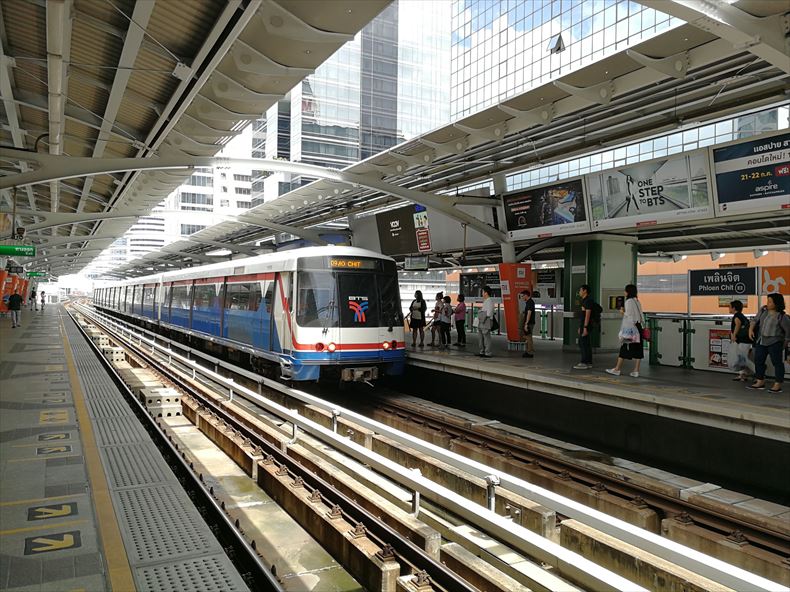
BTS Skytrain is one of the main transportation in Bangkok.
In this article, I will explain how to use BTS for traveler or beginners in Bangkok, route map, how to purchase tickets and important notices.
◆You might be interested in(English is coming soon).
BTS Route map・Fare・Operating hours
Route Map
BTS Route Map is as follows.
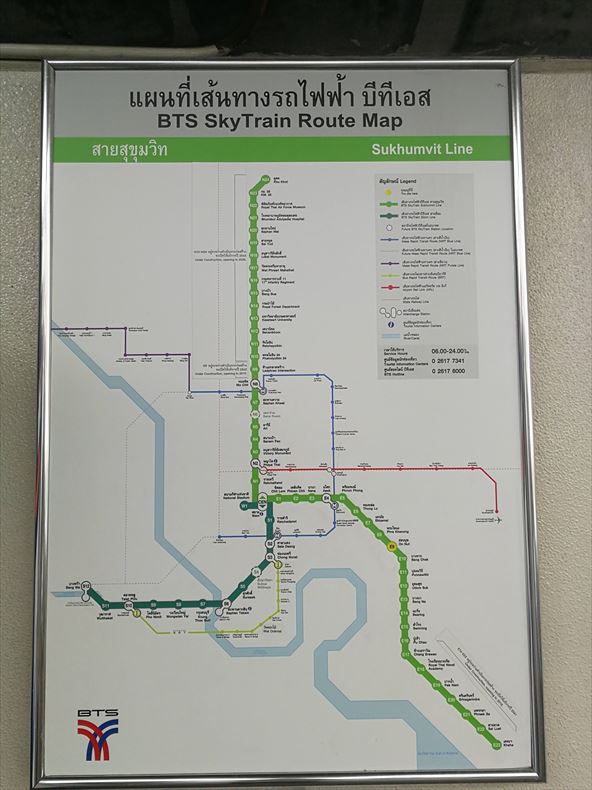
There are 2 lines : Sukhumvit Line (light green) and Silom Line (Dark Green). These are connected at Siam station.
All detail is shown in the BTS official website.
https://www.bts.co.th/eng/routemap.html
On December 2018, Sukhumvit line was extended. The last station for Eastside is Kheha station.
BTS Fare
The fare starts from 16 Baht to 59 Baht.
BTS Operation hours and interval
Operating hour is from around 6 am to 0 am every day.
The trains come in every 3-8 mins.
How to purchase BTS ticket
Ticket types
There are 3 types of BTS tickets.
- Single Journey ticket – 16-59 Baht
- One Day Pass – 140 Baht
- Rabbit Card – Rechargeable IC Card
以下、それぞれのきっぷの買い方を解説します。まずは普通のきっぷ(Single Journey ticket)から。
Single Journey ticket:Ticket Machine1(Pay in coins and notes)
This is a touch screen machine and shows the route map.
1Change Language
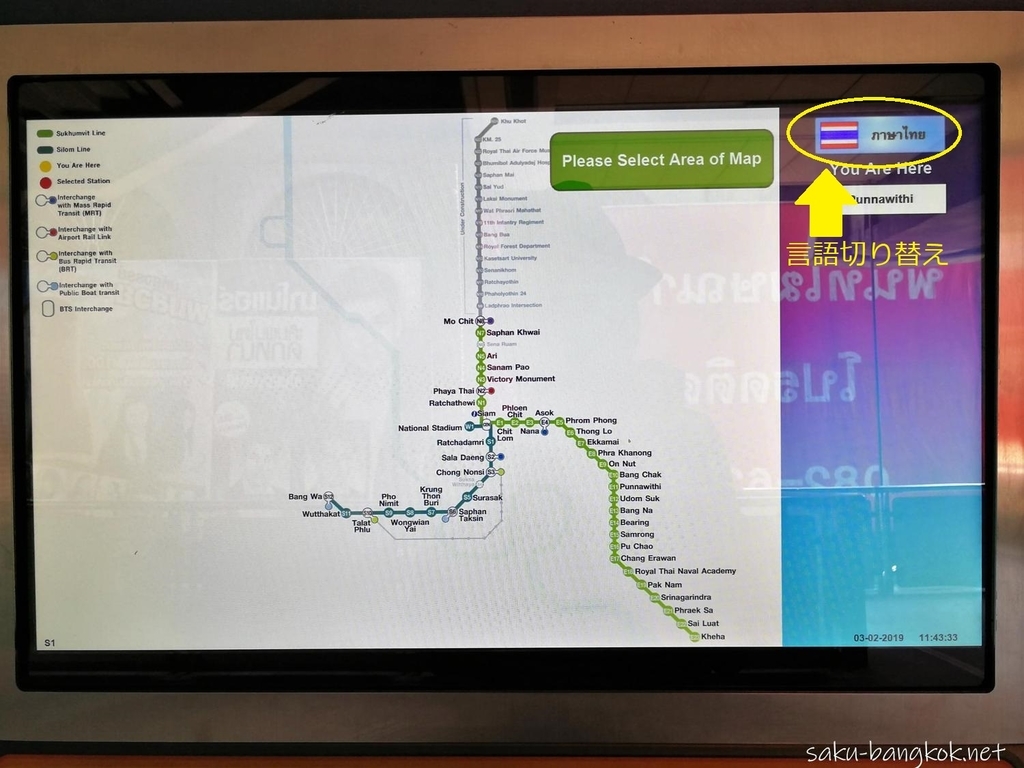
2Touch your destination station and zoom up it
3Touch your destination station
4. Choose ticket volume
5 Insert coins and notes
 6 Collect tickets and change
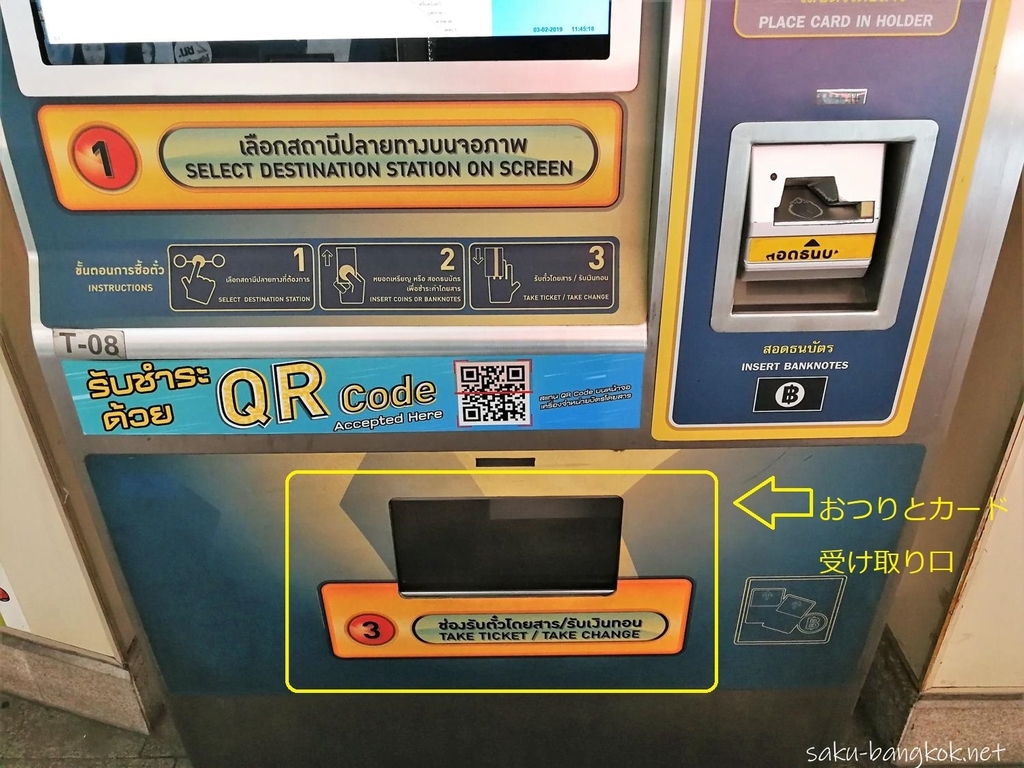
7 Tickets
Single Journey ticket:Ticket machine2(Pay in only coins)
This machine accepts only 1, 2, 5, 10 Baht coins. If you don’t have enough coins, please change your notes at the tickets counter.
You can use the machine the same way as machine 1.
1Change language
2Zoom up your destination station by touch the screen
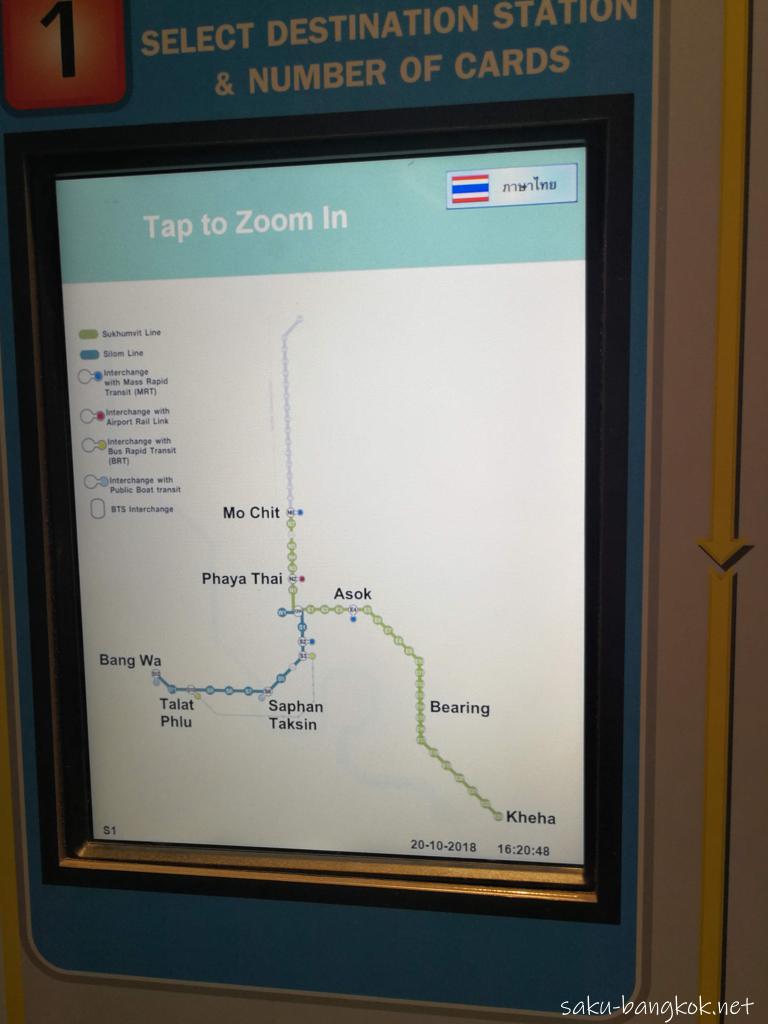
3Touch your destination station
4Choose how many tickets you want and insert coin
5 Collect tickets and change
※If you use Rabbit LINE Pay, you can purchase the ticket by QR code payment at Ticket Machine 1 (Notes and coins) and Ticket Machine 2 (Only coins). You can get 5 Baht cashback 10 times/month until March 31st, 2019.
One Day Pass
You can purchase One Day Pass at the ticket window.
The cost 140 Baht could be more expensive than your 1-day ticket cost but you can save your time because you don’t need to queue the ticket window.
I recommend this 1 day pass for the traveler who stays in Bangkok for 1 day or 2 days.
If you will stay more periods, I recommend Rabbit Card.
Rabbit Card
Rabbit card is rechargeable IC card. You don’t need to purchase on every ride by this card.
At least 200 Baht is charged when you purchase Rabbit Card. The detail is
- The card issuing fee:100 Baht
- Initial charge amount: From 100 Baht (100 Baht each)
You can purchase and top up Rabbit Card at ticket counter besides the ticket gate.
POINT
From 15th February 2019, you need to register passport information when you purchase Rabbit Card. Please bring your passport when you purchase Rabbit Card.
Return Rabbit Card and Refund
You can return Rabbit Card and get a refund at the ticket counter.
You can get refund the balance of the card but you can’t get refund Card Issuing Fee (100 Baht).
Rabbit Card is valid for 5 years, so you can keep the card if you travel to Bangkok frequently.
By the way, you are able to link your Rabbit Card with Rabbit LINE Pay. The article below explains how to link. It will make the card more smooth and convenient.
▶How to link BTS Rabbit Card to Rabbit LINE Pay – Saku’s Bangkok Guide
How to pass the ticket gate
Single Journey ticket
Touch the card on the ticket gate when you enter
Insert the card in the ticket gate when you exit
Rabbit Card
Touch the card on the ticket gate when you enter and exit
Caution
The ticket gate is closing quickly, so you have to hurry to pass through the gate.
Please lift up your bad to pass through the gate.
A security staff stands by inside the gate. Please show inside your bags only when the staff calls you. The staff doesn’t check all passengers.
The layout of the BTS station
Stairs and escalators to the home are at both sides of the station. Please check the end of the line station before walking up.
Saphan Taksin station has only 1 home
Saphan Taksin has a different layout from other stations.
There is only 1 home in the station, so you need to go to the same home for going to National Stadium station and Bang Wa station.
You need to check the train destination shown on the train before you get on.
Siam station has 4 homes (2 floors)
Siam station is the other station which has a different layout, because the Sukhumvit Line and Silom Line are connected at this station.
There are 4 homes in this station. 1. Sukhumvit Line Mochit station, 2. Sukhumvit Line Kheha station, 3. Silom Line National Stadium station, 4. Silom Line Bang Wa station.
- Home on the 2nd floor: Destination is Kheha or Bang Wa
- Home on the 3rd floor: Destination is Mochit or National Stadium
Check Exit No. in the station
Almost all BTS station has exits on both sides but you can’t go to the opposite side exit after you get out from the ticket gate.
You need to check the exit no. by the station map before you get out from ticket gates.
Other
Prohibited things in BTS station
You can’t smoke, drink or eat in BTS station and train.
If you bring some drink, the security staff at the ticket gate will confiscate it.
And balloon (with and without gas) is not permitted, too.
BTS fare for children
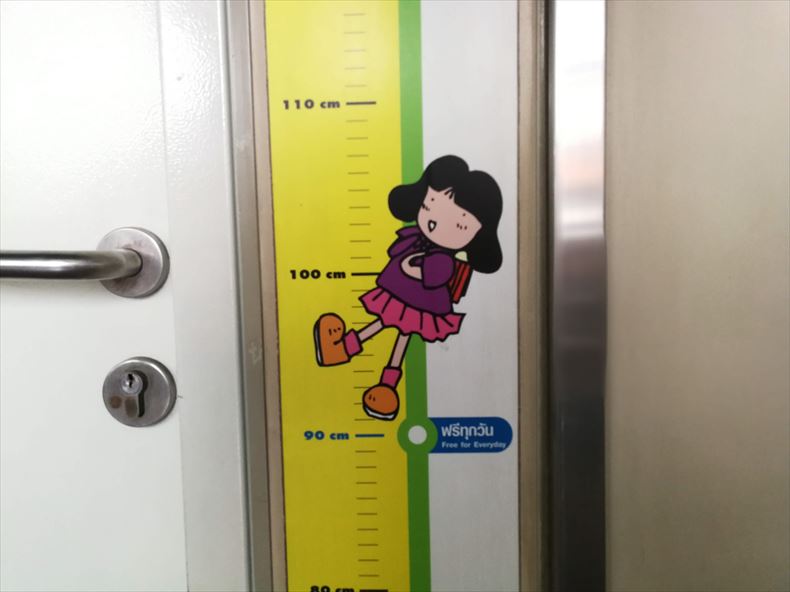
The children less than 90 cm height are free of charge.
For Wheelchair, Baby carriage, Pregnant woman
Elevator and Escalators in BTS station
Almost all bts station has an elevator from the ticket gate floor to the platform. But from the ground to the ticket gate, some stations don’t have elevators.
You can check where the station has it or not by this mobile application.

- Free

For Android users, click here.
Almost all stations have the elevators for going up but a few stations have the ones for going down.
Ticket gate for Wheelchair, Baby carriage, Pregnant woman
Normal ticket gate is narrow and close fast. For wheelchair or Baby carriage or Pregnant woman, please call the staff and use the gate beside the ticket window. You can open the gate by hand.
The gate is available for the passenger who carries large baggage.
No toilets in BTS station
There is no toilet for passengers in all BTS station.
But if you have an urgent case, sometimes, staffs would allow some passengers to use the toilet for BTS staffs.